Thursday, 15 February 2018

EVALUATION

An evaluation of our experimental show performed on Tuesday 13th February

Our experimental show, I would generally argue, was mainly a success as a pre-dominantly interesting and exploratory piece in challenging the perception of the audience who came to see it, and also delving deeper into our main stimulus for this term on dreams and the subconscious. It was composed of two parts: our site specific pieces which were distributed across the school and performed and presented by small groups of solos, duets and threes inspired by our collections from the Tate Modern and subsequently the group pieces which took place in the theatre rooms, but transformed these rooms into the canvas of a production that would hopefully be mind altering and innovative in its effect on the audience. Arguably, a lot of it was bold, visceral and fresh and challenged the minds of parents, friends and family that may or may not generally attend theatrical productions.   On the whole, the transition from the site specific piece to the main group pieces occurred smoothly and this made the whole show, including both of these components, more of an experience for audience members involved.

SITE SPECIFIC PIECE

As our site specific piece took place first, I will be evaluating this primarily. I think on the whole, the devising process for myself and Nastassja, my partner, was largely simple and straight forward. We took the main assets of the space we chose (outside the musical theatre department/peri rooms, near the science stairs) and knew quite quickly that we wanted to respond to the evoked themes of the space with the history of the school, which we already retained a knowledge of.  I was also quite keen on responding to the art piece 'Good Boy Bad Boy' by Bruce Nauman which I had seen at the Tate Modern, and so we integrated the knowledge that the school used to be a war hospital and our joint interpretation of the piece (explored in more depth in my linked blog post) as a basis to create the work. The end product consisted of a piece which attempted to integrate the thoughts, feelings and morale of soldiers in a war hospital like those that the Selhurst War Hospital may have hosted in the past, attempted in the same style as the actors in Bruce Nauman's piece, with the outset of the effects of war and post traumatic stress disorder, as well as glorification of war.  Following the template of Nauman's piece, we used these four words/phrases: 'dying', 'longing', 'fighting' and 'having fun' to communicate the paradox of war for soldiers invested in it, and alternated between the phrases through the sentence structure of 'I am... We are... You are...This is...'.  The performative aspect of the site specific piece involved myself and Stash lying on the floor, racking through the phrases with different exaggerated and heightened emotions, such as elation, anger, enthuasism, boredom, reluctance etc. At each end of a cycle, we would sit up from our lying positions, positions that were strategically staged to mimic the idea of a injured soldier sleeping, rotate, swap directions and lie down again. This continuous cycle and routine I think was effective in helping to communicate to the audience the monotony of everyday life for a soldier in this position, as well as correlating the idea of regimented routine in the military.  For an audience member walking past and observing our piece, I think that this from the outset was strong in communicating the themes of our piece, and was delivered with full commitment by myself and Nastassja throughout the 30 minute period to do this to the fullest extent.

 Furthermore, I would argue that the way in which we dressed the space was also arguably successful as a living component within our site specific piece.  We made a lot of posters based on the dialogue within our piece and references to actual wartime propaganda from the world wars and also used old actual pictures of the BRIT School as a war hospital to dress the space. I think that this was effective, adding to the piece within the existing space, because it evoked some of the meaning of the piece in correlation with the space to the audience. However, in hindsight, the way we dressed the space wasn't particularly visually pleasing or detailed, and as a site specific piece I think it is debatable on whether this kind of set quality enhanced the piece for the audience, or made it too literal for them. Based on my understanding of site specific pieces, I think a lot of the meaning of the piece has to be evoked from audience perspective and interpretation as opposed to being spelt out for them, and therefore from a perspective of hindsight I think that myself and Nastassja could have been more careful in evaluating the way in which we were going to dress the space, whereas this was more of an overlooked detail in the devising process.  Nevertheless, I think that we definitely perpetuated an atmosphere of eeriness or msytery through utilising the natural advantages of the space, and the fact that it was night time and slightly dark, and this meant that the way we dressed the space added to any potential meaning of our piece. Funnily enough, only half an hour earlier when setting up, myself and Nastassja were panicking about the darkness of the surrounding space because we knew that it would mean that all of the space we had dressed with posters couldn't be seen. However, we quickly solved this technical issue by taping a light to the wall that shone directly onto the space, and I think that surprisingly this actually tied into the eventual successes of the piece, as our bright and harsh space contrasted nicely with the darkness of many of the other pieces taking place in the dark around us.  This atmosphere undoubtedly may have transpired meaning for audience members, and the experience of going through contrasting areas with different lighting and moods may have been an interesting, even disorientating experience, which works effectively with the aims of experimental theatre. Having said this, other problems that did arise during the performative process included being slightly overshadowed by the loud and bold prospects of other pieces nearby, whereas our piece was a lot more subtle and quieter. This meant that myself and Nastassja were often having to tackle with other groups in being seen or heard, and it was somewhat stressful for a lot of the time.

Another drawback of our piece was the lack of interaction between myself and Nastassja, as well as lack of movement around the space. While we were quite restricted, I think that considering we were a duet, we definitely could have utilised interactions between eachother to amplify and enhance the meaning of our piece, and the experience for the audience.  One thing that I would argue was an advantage of us being slightly separate from eachother was the fact that we could create the paradox of emotions that we endeavoured to through communicating contrasting heightened emotions to the audience. However, I think that this would have been more effective if it actually involved immersing the audience through audience participation or direct audience address because we were completely disconnected from them, and this was one of the most significant drawbacks of the piece.

Finally, I think whether our site specific piece was actually site specific has an element of debate.  While it did have qualities that linked to the school, I think that it could be classified as more site generic in the fact that it could have easily taken place anywhere within the building and still been just as effective, or even more effective. Furthermore, I think that a more ideal space for the piece to be would have been in 'The Space', which was our other choice for designated space early in the devising process. With the darker lighting and/or options for technical lighting, as well as spacial proxemics, I think that our piece could have had more scope for being more interesting and detailed, whereas in the space we were in it ended up that we were quite restricted, and any physical theatre choices that we had originally decided to implement had to be cut, and therefore I don't think our piece was eventually as effective as it could have been.  The links to the chosen art piece from the Tate Modern were strong but I would argue could have also been stronger in a darker more versatile space such as 'The Space'. However, overall, I think that our site specific piece was successful because it had a strong concept that was also inspired by the artwork of the Tate Modern, and therefore was a fairly intriguing experience for the audience coordinated with commitment by myself and Nastassja.

GROUP PIECE

There were many varying assets of our piece which I think made it an interesting audience experience. Some of these involved the beginning part, which led the audience into a room where they would be involved in a sleep ritual, and then whole group ensemble moments, the devised pieces which sometimes interweaved audience interaction and the final part of the piece which involved creating a tribe like ritual with the audience and then leading them out individually to have private moments with specific audience members. Some of these moments were stronger than others, and I think a lot of it depended on the audience and how they responded to these different moments, as well as the way we as an ensemble coordinated them, and the amount of energy/commitment we put into doing so in relation to this.

Overall, I think that the strongest aspects of our piece involved moments that were mainly ensemble led, as well as the devised pieces.  I think that this is because as an ensemble in these moments we had freedom to improvise and to create something new, fresh and exciting that continually gave the production spontaneity and freedom.  In particular with the devised pieces that were coordinated in divided groups, it felt like although many of these had been rehearsed countless times, when there was any opportunity for improvisation, it gave the dynamic of these pieces a new feel. Personally, having seen the work of other groups' many times, I felt really proud and inspired watching the work of the other cast members as it involved a fresh new audience and I could see that this was really pushing and developing the work even further because the actors involved were committing even more than in rehearsals. For our group, I felt this especially - it wasn't just about going through the motions with the piece we had put together, but I felt like collectively everyone was committing fully to their role within it and put audience experience at the forefront by interacting with the audience and using their presence in the space to amplify the quality of the work. Because of this, I think that our devised piece really came together and we were able to also use the music that we overlayed in the background, 'Four Years and One Day' by Mount Kimbie, a somewhat last minute and spontaneous choice, to bounce off of with energy. It was moments like these where I wasn't just performing the piece, but I felt like I was enjoying it and truly empowered, and in correlation with Grotowski's ideas, it really felt like as an ensemble we were 'stripping off the mask'.

Similarly, other improvised moments that truly worked included the improvisation exercise where we would individually follow an individual objective within the space, and eventually become unified as an ensemble by only following one person's objective. Not only did I feel like as an ensemble we were all very aware of eachother and collectively engaged, having exceptional spatial awareness and mutual silent interactions, but it felt like the audience were equally as intrigued in what we were doing as we were as an ensemble, deeply concentrating. One very vivid moment I believe involved Amy's dad, where in response to Martha's instruction, to stare at one person, we all collectively stared at him for a period of time. This seemed somewhat shocking towards the audience, especially Amy's dad, and created an almost uncomfortable atmosphere where the audience didn't know what to expect. This almost satisfied the aims of the philosophy of Grotowski, Brook and Artaud who wanted to challenge and subvert the norms of a conventional theatre setting in which the everyday bourgeois would engage in a pre-set uninhibited theatrical setting, and would come out of it feeling no different to how they entered the theatre. Types of moments like these, although sinister, evoked Grotowski's 'series of shocks' in not only immersing the audience members but allowing them to embrace the idea of a challenged actor-audience relationship, and therefore find deeper meaning within the work. Despite this, I think this is fairly hard to achieve within reason. Grotowski and Artaud and even Brook were appealing to much larger audiences - people who wanted to see experimental theatre would mostly engage with them, and they also had the funding to create these large brilliant spectacles. But as a very budget school production with limited resources, as well as audience members who were probably appreciating the prospect of seeing a specific person in their end of term show rather than the artistic vision, it wasn't always easy to challenge the relationship since many audience members simply wouldn't tolerate it. As the experience of the audience member should always be the priority of any production, I think that this is acceptable but it did affect the energy in the room, as I think that we anticipated that more audience members would want to be involved in the sections that depended on their investment, and so when they didn't it inadvertently affected the energy of the ensemble.

Moreover, in terms of 'assaulting the audience', in terms of Artaud's vision, I think we did it. They were not embraced in this piece, and their hand wasn't held, or if it was, it was by a tentative Divon who hastily led audience members individually through a dark room where their picture was being put up - a shocking, almost insidious vision you wouldn't expect for a school production. From the start, the audience had to be invested, having to engage, and some audience members definitely took it easier than others. They experienced watching, observing and seeing vivid and nonsensical images being created before them as soon as the play began, and this would have likely been strange and uncomfortable. What it did more than anything was highlight Artaud's vision of a 'dream-world' where grotesque, strange and impossible elements that are often naturally suppressed by human nature, or which aren't conventionally seen, exposed or recognised within the general mass consciousness were definitely brought to the forefront of the work and in my opinion was the driving force of what made the work effective  -  by continually challenging audience perception. I thought that a devised piece that did this very well was Eva's group piece inspired by Sarah Kane which highlighted the basis of human insecurity and how we use drugs and alcohol to suppress those feelings. Their song with the lyrics 'I am fat' consistently being repeated was shocking because in reality no one really likes to talk about their insecurities, and its part of our everyday human nature in this current society to create a facade in which we idealise a version of ourselves. Sarah Kane's work really does highlight these suppressed themes and I think that using it within our work, as well as the work of other experimental artists, became really powerful by the production because in spite of us become very familiarised with it as a group, many audience members may not have been familiar with these works so the whole prospect of what was being delivered to them was more alien, and in turn it could be argued that this fulfils the vision of Artaud, for example.  Having said this, I think that more focus on a range of experimental innovators, as well as writers, but artists and musicians too may have made this impact even more powerful.

Likewise, text was another strong driving force of our show, particularly in the pair duets where we used text couplets to inform a small devised movement piece, that trailed throughout the ensemble. This was a powerful moment which used text as a basis to evoke deeper meaning in the piece, and I thought that this was one of the only moments within the play where because we weren't directly interacting with the audience, they actually had a moment to reflect on what was being delivered to them, and any possible meanings of what it could show.  It also created Artaud's vision of 'visual poetry' because the dance and movement communicated a meaning in itself. Similarly, the impact of not interacting with the audience and instead moving around them was equally as powerful at moments within the piece. Our piece shifted from being very bold and in your face, to having genuine moments where we created spectacles for the audience to see, particularly the continual idea of the 'city of dreams' that became most vivid after the improvised sections where we created various rituals of city life, including walking clockwise, being on a tube, grid walking etc, and using this to challenge audience perception. This contrast seemed very useful as it meant that we had moments where we were 'assaulting the audience' by being in their face and challenging the actor-audience relationship, but what might even be more assaulting is the prospect of presenting aspects of everyday life for the audience and challenging how they view it.  Artaud believed that this should be done to 'shock' the audience out of the rut of their everyday structured lives, therefore I think that this with the combination of text was highly effective in doing so.

I think our professional execution of the show could have been improved slightly, particularly during aspects of the show like the sleep ritual and the part at the end where the audience were having private moments with us as cast members where we told them our dreams. Based on my personal experience, these were weaker moments because I think the illusion of it being a very macabre and strange experience was almost broken and it became apparent that it was all acting as opposed to creating a vivid and real disorientating experience for the audience members. It seemed as though because of this the audience weren't as willing to engage, and didn't seem as connected or interested in what was going on. The sleep ritual didn't exactly go to plan, and this could have been because we as an ensemble could have approached it with more commitment in making the soundscape, or whether the audience in the beginning of the show weren't prepared or invested in the prospect of what would be a very full on experience. Nevertheless, I think that on the whole our professional execution could have been improved in continually picking up the energy in moments like these with commitment.  However, overall, with this in mind I think that as an ensemble we handled it very well and overall the show went very well. As an experimental theatre product we were able to experiment with the visions of Artaud, Grotowski and Peter Brook, for example by creating an audience involved ritual-chant at the end, and with the elements of improvisation, freedom and bizarreness we created something quite beautiful and thought provoking.

Monday, 5 February 2018

DEVISING

In our session, we had to respond to a number of stimuli created by three artists/playwrights, including Sarah Kane and Tim Etchells through drawing on a piece of paper:


This is what I produced. Essentially, it's just a lot of scribbles on paper consisting of lots of jagged and rough lines but considering a lot of the stimuli material was dark, these were the most direct associations that immediately came to mind.  Through a discussion on our exploration through drawing and art, it became apparent that really dark, vivid and sensitive themes that are often suppressed everyday by society are most poignant in these art forms, highlighting the power of art and theatre in addressing what is usually suppressed by humans, and as Artaud said portraying through the 'Theatre of Cruelty'.  

SARAH KANE


In particular, through this exercise I became quite fascinated with Sarah Kane as an artist.

Sarah Kane was an experimental playwright and poet originally from Essex in England. Her work is experimental because it consists of themes of sexual desire, pain, torture, depression, redemptive love and death.  Her work is intense and bold, using extreme and violent stage action and using pared down language. She was heavily inspired by expressionist theatre and Jacobean tragedy, and has also been associated with In-Yer-Face theatre.


Her first play was 'Blasted' published in January 1995 which received extreme press criticism. The story takes place in a Leeds hotel room where an older male journalist is attempting to seduce a young woman with raw language and tackling powerful images of rape and cannibalism. On the front page news of the Daily Mail and by even well respected critics, it was branded 'filth', the Sunday Telegraph called it 'canrage' and the Spectator called it 'a travesty of a play'.  Blasted didn't just shock because of its explicit sexual and violent themes, but its innovative structure in which the first half encompassed naturalism and the second half encompassed an almost nightmarish unstructured and symbolic premise.

Subsequently, Kane's future works included Phaedra's Love, Cleansed and Crave which developed on an incentive to portray extreme emotional content and theatrical innovation. Sarah Kane remained equally as controversial as she had done with Blasted, but continued to make theatrical innovations, for example with Crave she had four nameless characters who didn't have direct conversations yet had set dialogue which could be addressed at anyone on stage. 

4.48 Psychosis was Sarah Kane's last play shortly before she committed suicide at age 28, and tackles suicidal depression. Many argue that this play wasn't an artistic visionary work but was more a reflection of her direct life and emotions, simply reproducing her mental illness, whereas others emphasis Kane's talent for continual theatrical technique. 

Putting visceral and raw themes on stage almost engages with Artaud's idea of embracing the Theatre of Cruelty, and as we are devising a piece for experimental, research into Sarah Kane has really informed my awareness of how far the boundaries can be pushed through theatre between the audience's comfort and the actors conveying these themes.

INDIVIDUAL GROUP DEVISING

Throughout the devising process, we have focused pre-dominantly on devising a piece in groups associated with dreams and based on a stimulus and then performing them to the rest of the group for contribution to the final piece. 
I was working with Liv, Stash, Rrahim, Martha and Tallulah in creating a piece inspired by Tim Etchells' 'The Dream Dictionary for the Modern Dreamer'.  Throughout our devising process, we continually related our work and inspiration back to our associations with dreams and the city of dreams.

We eventually produced a piece that explored how the true playful human nature inherent in all of us comes out in our dreams and through our imagination, and how over time the structures and restrictions that society has implemented have often regulated our imagination to a point where in our dreams we rebel against this and vivid dreams with nonsensical playful aspects are poignant. This idea was evoked by discussion as a group, as well as improvisation which is quite integral to devising experimental theatre. Furthermore, we produced this through using the text from Tim Etchells' Dream Dictionary to portray assets of the 21st Century and how they may be conveyed through dreams, and through doing a number of spontaneous exercises acting on impulse and tapping into the inner playful 'hooligan nature' of us all we produced a 5 minute piece. At the end of our piece we involved audience participation by improvising a song that provokes the audience via the Theatre of Cruelty with lines such as 'You are dying'... 'Your time's running out' and then 'This is all a dream' to the popular tune of 'We Will Rock You' to again integrate the ideas of modernity and its hold on us as a society.  In the first week of devising, it was received generally well by the audience and it definitely as a new and fresh devised work held a lot more spontaneity and therefore was appraised more enthusiastically by us as a group.

Nevertheless, embarking on improving, refining and rehearsing the devised piece a couple of weeks later through integrating more text into Etchells threw up a challenge in the process that we hadn't experienced two weeks before. I think that naturally over time the enthusiasm that came with a freshly produced piece developed off fresh conversation, imagination and ideas had lost some of what made us all excited about it to the point that when we rehearsed it again, we immediately didn't believe in the credibility of it as an artistic work.  Also, I think that in the first week of devising, our link Etchells' work as a stimulus was quite loose so adding more text immediately became more challenging: we cut quite a lot of the material that didn't encompass anything that evocative, and this included the song. Originally the song was effective because again we were all committed towards the pursuit that it was a original idea, yet as many of the other groups had produced songs too we decided to cut it as weren't as committed to it as something that would actively improve and give the piece more colour and dimension. What had originally been a direct reading of Etchells' work evolved into a more spontaneous improvisation based off our thoughts and feelings on ideas explored in the Dream Dictionary in the final work, and I think this was a solution to the lack of inspiration we had felt having to integrate more text into the piece, when originally our enthusiasm of the piece was based off the ideas we were gaining off insights into the Dream Dictionary itself.

In correlation with our ideas into the whole group piece as a whole, we made a decision to play electronic music with the piece which corresponded with Artaud's idea of having 'ear shattering sounds' as part of the work. Using the song 'Four Years and One Day' by Mount Kimbie, it helped us feed off the upbeat rhythm it has throughout adding to the spontaneous energy of the mostly improvised element of our devised piece.


TIM ETCHELLS


Tim Etchells is a British artist and writer who is based in Sheffield and London. He has his own theatre company called Forced Entertainment which is an experimental theatre company in which he is the artistic director.  He has published a number of fictional works, including Endland Stories, The Dream Dictionary for the Modern Dreamer (stimulus) and the novel The Broken World. 
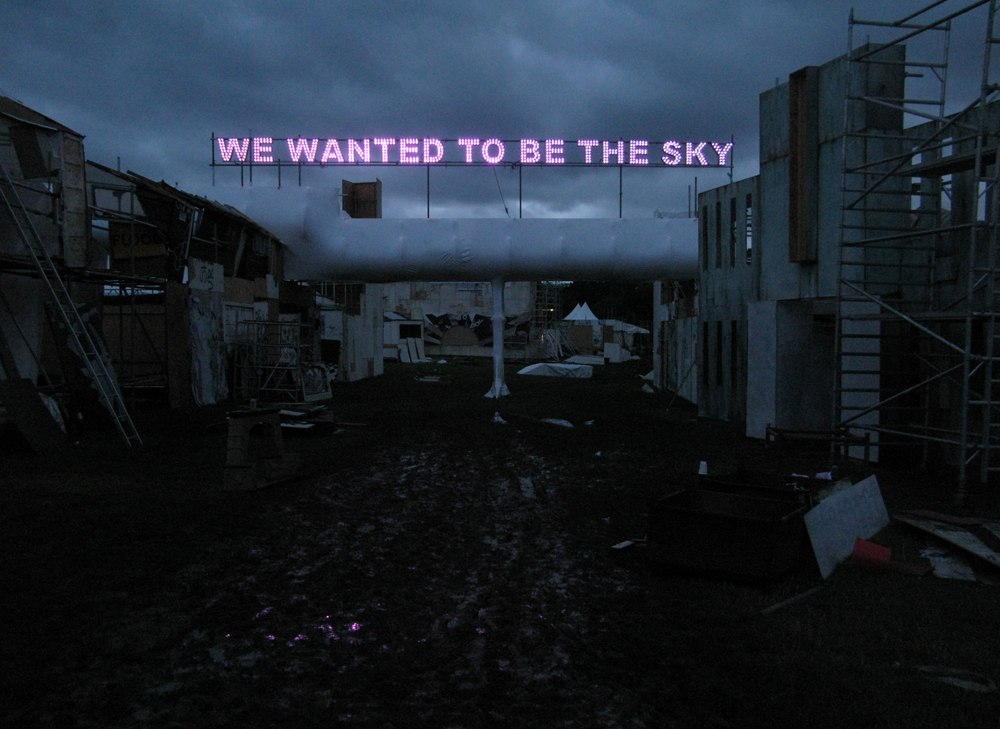
He frequently collaborates with artists, and makes public sculpture works such as A Stitch In Time which was commissioned for the Lumiere Festival and comprised of signs made of LED bulbs. Other exhibitions he has worked on include 1999 Void Spaces and the ongoing series Empty Stages. 
An Art in America article on 'Happy Days in the Art World' commented on Etchells: 'Etchells is an experimental British playwright of some fame whose work is Beckettian, not Beckett-esque. His work is mocking and meandering but can really get under the skin, and prick at latent feelings of abjection, loneliness, the inability to communicate, futility'. 
It was this essence of the research I did into Etchells as well as his other work that has made me really inspired by him as an artist. In terms of our vision for our eventual piece about the 'dream city', Etchells is a very relevant stimulus because his work (particularly in a lot of the images I've listed below) integrates the landscape of the city and everyday life and deeper complex emotional statements. 


IDEAS FOR RITUALS IN THE CITY

As part of our piece, we want to represent the rituals of the city through a dream context. From my own personal brainstorming as well as group discussion, here are some of my findings and observations of some 'city rituals':
  • Queuing/waiting in public spaces
  • Saying sorry constantly (in correlation with the above statement) - very British sentiment
  • Public transport and not talking
  • Keeping to yourself
  • Crowds
  • Democracy/freedom of thought and the process of expressing your opinion
  • Integration
  • Communication
  • Transportation

DREAM TEXT

"What speech the dead couldn't say whilst living, they can tell you when they're dead"


I will use the first dream in my dream diary to use as a story to tell the audience. Having discussed this in class, we want to remove all traces of Western culture and ambiguise them so that the dreams seem more nonsensical, which I think in correlation with the few dreams included in my dream diary is

IDEAS FOR SHOW

  • The power of the empty space and potential of group improvisation
  • Sleep ritual - putting the audience to sleep
  • Ritualistic clothing: whites, blacks, greys
  • Use of lighting and technology
OTHER EXPERIMENTAL ARTISTS

These are some other experimental artists that have informed and inspired me in the devising process:


  • Björk


  • Brian Eno 


  • Yoko Ono 

Sunday, 4 February 2018

GROTOWSKI

JERZY GROTOWSKI AND HIS EFFECT ON THE THEATRICAL LANDSCAPE


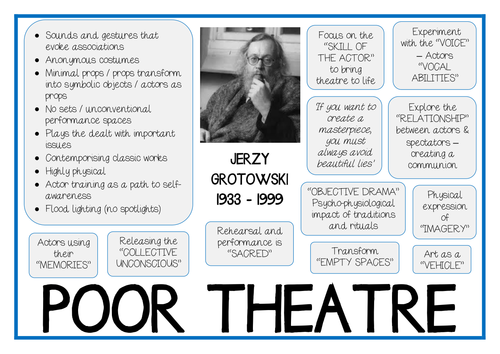
Jerzy Grotowski was born in 1933 in the city of Rzeszów in south east Poland, and since then has become known as one of the grearest reformers of 20th century theatre. He was a theatre director, theoretician, educator and creator of acting methods.

GROTOWSKI'S EARLY LIFE AND CAREER

Grotowski was born on the 11th of August 1933 in Poland. The war came in 1939 soon after and the strong familial bond Grotowski held was destroyed, with his father conscripting and never returning. Grotowski as a result grew up with the destruction and horrors of the Second World War pervaded around him. As a result, he moved to the small village of Nienadówka where Grotowski experienced a lot of essential things that shaped him and his work in the future. 

In 1951, Grotowski began studying at the National Theatrical Academy in Kraków and graduated from the State Higher School of Theatre with a degree of acting.  In 1955-1956, he began to study directing at the Lunacharsky Institute of Theatre Arts in Moscow. There, he learnt about the concepts of Russian theatre symbols such as Stanislavski, Vakhtangov, Meyerhold and Tairov. He has been said to admire Stanislavski as 'the first great creator of a method of acting in the theatre', someone he believed had asked 'all the relevant questions that could be asked about theatrical technique'.

In 1957, Grotowski made his debut as a director at the Stary Theatre in Kraków where he collaborated with Aleksandra Mianowska on a production of The Chairs. At this time, he was also prominent in creating polish radio plays, based primarily on Chinese and Tibetian legends as well as Indian theatre. He was avidly interested in Asian philosophy, and optimised this through discussion at the student club Pod Jaszczurami meaning 'under the sign of the lizards'.

In 1959, Grotowski joined a newly founded theatre called the Laboratory Theatre, which permanently appeared in western Europe in 1966.  The first production at this new theatre in Opole premiered in the same year as Jean Cocteau's Orpheus.  One year later, Grotowski was involved in directing George Byron's Cain. As a result, he became acquainted with Jerzy Gurawski, an architect and they collaborated in the latter production of Cain, leading to a new organisation of theatrical space which culminated in the abolishment of a 'picture frame stage' and the division between the audience and the actor. In 1961,  as part of the 'Public Stage' of the Teatr 13 Rzędów the director put together two productions that were so-called fact-montages: Turyści (Tourists) and Gliniane Gołębie (Clay Pigeons) were based on authentic documents, documentary film footage, and archival sound recordings. 

Grotowski loved to look at existing texts, and was interesting in reviving them through his theories and conceptual visions. Before the Laboratory Theatre or 'Teatr Laboratorium 13 Rzędów' closing in 1965, he directed a series of productions including an adaption of Faust by Christopher Marlowe, 'The Tragic Fate of Doctor Faust' in 1963, A Study of Hamlet, adapted from Hamlet by William Shakespeare as well as a third variation of Acropolis by Stanisław Wysipiański in 1964.

  When the theatre closed in Opole, Jerzy Grotowski relocated his ensemble to Wrocław, reviving its adaptation of Acropolis in collaboration with Józef Szajna. This new theatre based in Wrocław was referred to the 'Instytut Badania Metody Aktorskiej' by Grotowski, or 'The Institute for the Srudy of Acting Methods'. Grotowski's break through production at this new and continued theatre was a play called Apolcypis Cum Figuris, which embodied a Christian stance through drawing on quotes from the Bible, the works of Fyodor Dostoyevsky, Thomas S.Eliot and Simon Weil. Along with 'The Constant Prince', the premiered play of the time of the theatre's opening, and Akropolis, this play became one of the most famous of Grotowski's productions throughout the world, recognise din three different versions of 1968, 1971 and 1973.  In 1971, the Wrocław theatre eventually acquired  new name: 'The Actor's Institute - Laboratory Theatre'. His subsequent productions were then created with his leading actor, Ryszard Cieślak. In the 1960s and the 1970s, the Laboratory Theatre went on many grand foreign tours and participated in the majority of the world's most significant theatre festivals.

In one of his first productions,  Grotowski did an adaptation of 'Gods of Rain', a literary novel written by Bogowie deszczu, however it optimised controversy as Grotowski had 'collided with the author, while his theatre collided with literature'. Grotowski had changed the title of the play and interlaced the text with fragments from poetry and film. In the programme to the production, Grotowski detested by saying that "to select an author's play, does not mean to share his views". In an interview later, he expanded on this by saying that "in terms of my attitude to the dramatic text, I think that the director should treat it solely as a theme upon which he builds a new work of art that is the theatrical spectacle". From this moment, he became very defensive as a director that liked to work with text, making most productions built 'according to' or 'baed on the words of' the text's author. He wanted to transform plays completely into theatrical impressive spectacles. Arguably, some people thought he was too experimental as he tried to literally 'edit productions' like a filmmaker might edit a film. He later admitted that Cain was 'more of an exorcism of conventional theatre than a proposal for a counter-program'. 

As a result, Grotowski at this time was beginning to significantly create his own 'program'. He wanted to research deeply into the relationship between the stage and the audience and therefore the actor-audience relationship. For example, in Sakuntala the audience became the role of the collective hero, in Forefather's Eve they were immersed as participants in the ritual and in Kordian they were the patients of a psychiatric ward.  Grotowski focused in new and exciting ways for actors to express themselves on stage, particularly through the exploration of 'Shakuntala', which Grotowski later stated that they had used to test 'the possibilities for creating signs within the European theatre. Our intentions were not entirely deprived of mischievousness: we sought to create a production that would be an image of Oriental theatre, not entirely authentic, but similar to the manner in which Europeans would imagine it. However, below the surface of this search that was at once derisive and directed against the viewer, there was a hidden program - the effort to discover and reveal a system of signs that would be appropriate to our theatre and appropriate to our civilisation". Through this process, Grotowski discovered a set pattern and began 'the initiation into a search in the realm of organic human reactions, and to the creation of a structure of these reactions. This is what resulted from this most fruitful adventure in our troupe's history, specifically, it resulted in our research into the art of acting'. 

THE 'POOR' THEATRE / 'TOWARDS A POOR THEATRE'

In 1965, in an issue of the monthly Odra, Grotowski published a sketch titled Ku teatrowi ubogiemu (Towards a Poor Theatre) which later became the title of his book published in Denmark in 1968, and later in the United States (with a preface by Peter Brook). It became significant as a book studied in many countries, very important as a book for exploratory and experimental theatres in the 60s/70s. 
The book was an encapsulation of how Grotowski developed as a director in his primary creative period where he focused on specific acting methods and formulating the idea of a 'poor theatre'. A 'poor theatre' subverted from technological resources used in 'rich theatre' and any other theatrical trappings: he wanted the actor's voice and body to be central to the work, with minimal lighting, costume and sets.  The book illustrated on how physical work by actors that took place for long periods of times and was largely inspired on East Asian techniques, with a big emphasis on the voice resonators. He was enthuasiastic about tapping into the sources of ancient expression, and was also interested in Carl Jung, a psychiatrist and as a result sought out archetypes to ensure that roles could be built authentically, with the actors committing to it almost like an act of sacrifice. These acting techniques were not intended to be like a state of trance, but were committed to nurturing precise acting in a state of sharpened consciousness. 
The Constant Prince and Apocalypsis Cum Figuris were demonstrations of the emergence of ecstatic acting, and exemplified the concept of 'poor theatre'.
Here is an extract from 'The Empty Space' written by Peter Brook, who was influenced by Grotowski greatly and talked about the 'poor theatre': 
In Poland there is a small company lead by a visionary, Jerzy Grotowski, that also has a sacred aim. The theatre, he believes, cannot be an end in itself; like dancing or music in certain dervish orders, the theatre is a vehicle, a means for self-study, a means for self-study, self-exploration, a possibility of salvation. The actor has himself as his field of work. [...] Seen this way, acting is a life's work - the actor is step-by-step extending his knowledge of himself through the painful, ever-changing circumstances of rehearsal and the tremendous punctuation points of performance. In Grotowski's terminology, the actor allows a role to 'penetrate' him; at first he is all obstacle to it, but by constant work he acquires technical mastery over his physical and psychic means by which he can allow the barriers to drop. 'Auto-penetration' by the role is related to exposure: the actor does not hesitate to show himself exactly as he is, for he realizes that the secret of the role demands his opening himself up, disclosing his own secrets. So that the act of performance is an act of sacrifice, of sacrificing what most men prefer to hide - this sacrifice is his gift to the spectator. [...] Grotowski makes poverty an ideal; his actors have given up everything except their own bodies; they have the human instrument and limitless time - no wonder they feel the richest theatre in the world.  - Peter Brook
In the 1970s, Grotowski became sidetracked from the prospect of theatre and didn't produce any theatrical productions, instead becoming more obsessed with Central Asian culture and spirituality. In 1970, he travelled to India to venture on this interest. He also became more involved in teaching classes for Polish and foreign actors - through this, he wanted to focus on interpersonal relationships between actors and the interactions between human beings in general. Although he had previously focused on banishing the division between audience and actors, in 1973 this became almost abolished through a new way of creating theatre that completely abolished any boundaries between actor and audience completely. He invited participants from around the world to become involved in group séances that had an ethical and psychotherapeutic dimension to them, to find some sort of inter-personal understanding between communal action, whether that would be involving voice, movement or group singing. 

THE THEATRE OF THE SOURCE 

In 1976, Grotowski became mainly focused on the idea of 'Teatr Zródeł' or 'Theatre of the Source' which he prusued in the northern city of Białystok, as well as voyages to Mexico, Nigeria, India and Haiti. This was highly focused on the idea of anthropology and looked at rituals from around the world, finding the common denominator between them which encapsulated a theatrical form. Techniques were applied to create a tangible link and connection with the natural world. 

OBJECTIVE DRAMA
Grotowski emigrated to the United States in 1982 when Martial Law was declared, where he taught as a professor for a couple of years and eventually had a revelation towards his next project, the 'Objective Drama'. At the same time, in 1984, the ensemble of the Laboratory Theatre in Wrocław voted to close the theatre, and Grotwoski relocated to Pontedera in Italy, working at a new centre of his own name 'The Work Centre of Jerzy Grotowski' with a group of interns from around the world who focused on 'Ritual Plays' with him. In the last years of his creative life, it was spent on laboratory work where his students studied intensely. This programme consisted of seeking out common, cross cultural stances and movements that could become universal, which was part of a greater aim to ritualise a creation of arts. This was known as objective drama, and consisted of many private theatrical events almost in secret for the last twenty years of his life. He died in 1999 at his home in Pontedera. 


"Art is a ripening, an evolution, an uplifting which enables us to emerge from darkness into a blaze of light" -Jerzy Grotoski 


A DREAM DIARY

STIMULUS

As part of gathering material for our experimental piece under the theme 'dreams and the subconscious', I will be documenting my dreams in a 'dream diary' for use as stimulus and inspiration for the coming term. 

Generally, I don't remember my dreams and they are never that vivid or something I can recall, and I only ever really remember my nightmares, so a lot of the material in this dream diary is quite fragmented and random as a result, and there might not be a lot of consistent dreams. 

6th January 

I had a dream that I was on overnight long haul Hogwarts train travelling somewhere and I was doing this with my mum and a couple of other family members. It was never clear where I was travelling, except I can vividly remember that for part of the dream I was walking down the middle of the train travelling through carriages in pitch darkness, and I was trying to look for my mum, but there was no sign of her. This part of the dream seemed like it carried on forever, and seemed quite desperate. 
The next part of the dream I got off the train by myself, and ended up in a corner shop where some people from theatre strand randomly popped up, but none of whom are people I am that close with, which was strange. What happened next was we were kicked out of the corner shop because the people began to mess up the shop display, and I went back into the shop afterwards to apologise to the shop manager. At this point, the 'shop' was no longer a shop, it was a restaurant, and for some reason I was apologising deeply to the man who was working in there that I was sorry that no one had dined at his restaurant, and was reassuring him that it would be okay because he had 'good vibes' and a 'warm spirit'. Interestingly, I think that this stemmed from a deep rooted sadness I get generally when I see shop owners or restaurants without business. In response, the man thanked me and gave me a rose, and then I left the restaurant and was on a street on my own. It was dark at this point.
I remember that I got my phone out to try and navigate where I was and it was on 5%. I then realised I was in North London, an area I'm  familiar with at all. I ended up getting lost in a massive maze like park in Walthamstow, which had really weird multiple exits. At this point within the dream I was panicking. I bumped into this man who then triggered a recurring dream I had previously. I ran up to the man and was chasing him to grab his attention and he referenced what had happened in my recurring dream in which this random man made me pregnant, and then the location changes to an abandoned corridor or back room in a corner shop.  At this point I figure out I am truly pregnant, which was weird as the night before I had also had another dream about being pregnant. Within the dream I realise I have been kidnapped by this man, and I am being held captive within the corner shop. The police randomly arrive, and ask me if I want him to be arrested to which I reply 'yes'. We're brought to the front of the shop and then the police begin to set fire to it. This part is reminiscent of th recurring dream as then the police get a pig and murder it right in front of us, which I keep dreaming about. The man starts throwing up relentlessly in response to the murder of the pig, and then the police disappear. The next thing I know, the guy is beginning to transform into a grotesque extra-terrestial creature and he is swelling up and growing bigger and bigger until he is like a ball of alien substance. I am terrified as he is shouting at me that 'it's your fault' and I run out of the shop. The nightmare ended there as I woke up, extremely scared.
This is one of the worst nightmares I've had in a long time, and I told my friend about it at 5am when I woke up, which is how I've had it documented. 


18th January
I had a dream that I was staying in an Air BnB house with Stash, Ruby, Aaron, Ivo, Abby and a few other people. I remember the house was massive and had multiple storeys and I remember that in the dream I was walking up to the top floor which was a balcony kitchen. For some reason in my memory, the vision of a saucepan is really prevalent, I don't know why.
The next part seems random, but I'm convinced it happened in the same dream. It consisted of me opening a really extensive school report but it was only based on my progress in theatre. When I read it though, it wasn't really a school report, it was like an assessment of my character written by a few of the theatre teachers. It was quite intense as a dream because the report was roasting me essentially, saying that as a person I was 'too sad' and this sadness was affecting everyone else. The next part of the dream was equally as random, and I ended up outdoors with the same theatre teachers who had written the report, and it basically turned into a nightmare. What had been written in the report became more pronounced to me and became increasingly intense and frightening, and then I woke up. 

21st January 
I had a dream that I went to a house party in the Monsters Inc factory with Ivo, and that part I can't remember, except the next day we were trying to get to school, which consisted of getting the bus and then the tube. 
We were waiting at the bus stop, but a bus wasn't coming. A while later, a really strange little bus arrived and it said that it was only stopping at Victoria, so we both got on. The bus was packed full of really strange people, and Ivo's editing teacher for FMP is also on the bus. At this point we're running really late to school. The bus came to a stop, and four men in suits got on the bus and they start yelling for everyone to be quiet. They then reveal that they're from a charity and start lecturing everyone on the bus about it, and then we get off the bus. We walk all the way to Victoria and Google Maps keeps glitching out, so we have to keep guessing which way to go. Eventually we get to school and school has finished and we missed the day. Then I woke up. 

28th January

I had a dream that I was on holiday with my parents and my boyfriend in a city, but in the first part of my dream my friend Rufus was also there for a brief moment. In the beginning of the dream, we were in a supermarket which looked like the foreign alternative of Sainsburys (very identical to Sainsburys). We were going around Sainsburys and Rufus was pushing a trolley and putting various foodstuffs into his trolley, but he was insisting that I had to record a time lapse on his phone of him doing this the whole time we were in the supermarket. I remember in the dream I didn't question it, and just did as he asked me to, until eventually his phone was only on 20% which wasn't enough battery to record a time lapse according to his phone. I hand Rufus back his phone, and suddenly I'm with Ivo and we've left the supermarket and we're now sightseeing this unknown city and looking in museums and galleries.
As we do this, the landscape is very beautiful and perfect. It is winter, and we're warm and layered up in lots of clothing. The sky is a beautiful blue and we keep staring at it, and there are fairy lights strung across all the buildings. We are standing outside a museum admiring the view and a man with a skinhead and piercing blue eyes, as well as a denim jacket, approaches us and asks us many questions about us. He asks us if he want to be involved in a photo-shoot there and then, and we agree and follow him down the street. We end up in a building where we have to walk up these perfect white flights of stairs and we finally arrive in this smallish room where a meeting is going on between the manager of this modelling company and all the recent scouts. Me and Ivo are reasonably confused, because the range of people in this room is quite bizarre - there's a baby as well as a Japanese instagram model/singer called Rina Sawayama and everyone is greeting eachother in different languages, adding to our bewilderment. The woman running the meeting looks like Elaine the Pain from Tracy Beaker but she has very curly hair, and she's getting very annoyed at the baby who isn't listening to her talk.
Nothing else really happened in the dream except a vote was taken for me and Ivo to become models, and then I woke up.

30th January
I dreamt that I was seeing a play in the West End with Stash, Aaron, Fergal and Angèle (a weird person to be in my dream since I am not close with her at all and she is in another strand). The beginning of the dream was me on my way to this theatre, and I was with Luke Martin and Laila and we were running late. When we got to the theatre, we were running late so we had to wait in the foyer and look at the monitor and there was very loud music being blasted, which I think was Radiohead. We had to wait for an appropriate time to go and take our seats as the play commenced, and when this moment finally came a massive crowd of us went into the theatre but at this point the lights were up and there was no one on stage, so it was like the play had paused or hadn't started yet. The theatre was extremely wide but there was massive pilons around the tiers so there was only a small strip of seats in the theatre that weren't restricted view.  I was sat with Stash and Aaron and because we were sat in a strictly restricted view area, we could hardly see anything. The play began shortly after, but the lights stayed on for a bit, and then it got extremely pitch black. There didn't seem to be any actors on stage from what I remember, but there was films and projections being projected on stage. Meanwhile, there were these guards who were walking up and down almost monitoring the audience. They were quite intimidating from what I remember. Not long after the play started, the guards began to shoot these pistols into the air that made loud noises and the lights of the theatre ame back on. They insisted that they'd heard two phone ringtones, and as a result they had to confiscate everyone's phones. At this point, Angèle was sat next to me, and we both gave our phones into an extremely sarcastic and intimidating security guard. I remember I had an argument with this security guard because he wouldn't believe that my phone was on airplane mode, and therefore couldn't have been making sounds, but I was lying the whole time. For some reason, although it seemed as though Angèle had given her phone in, a few moments later we were taking selfies in her phone. The dream ended up with me and Angèle in McDonalds, but we weren't having anything that is actually on the McDonalds menu - we were eating sweet potato fries from Gourmet Burger Kitchen. 

4th February
I woke up crying from a very traumatising nightmare, which was strange because in the nightmare I was crying to. The nightmare seemed very short, and it happened at around 6.30 in the morning after I woke up and went back to sleep, and then I woke up at 7.45 again. I had an argument with my dad in this dream about some school work, and it got so heated to the point where he said he wanted to kill me and wanted me to die, and started calling me a retard. The nightmare was intense as I vividly remember that my whole family weren't helping or defending me: my brother was laughing at me, my brother's girlfriend was paying no attention and was on her phone and my mum was half ignoring the chaos and half brushing over it. This is all I can remember. 

BROOK


PETER BROOK


ARTICLES EXPLORED SURROUNDING PETER BROOK:

Peter Brook: 'Theatre exists in the present. You can't ignore the news' - The Stage
Peter Brook: 'To give way to despair is the ultimate cop-out' - The Guardian
'Peter Brook is an exceptional human being' -The Telegraph


Peter Brook was born in 1925 in Chiswick, London to Jewish immigrants. Brook had a relatively good education, studying at Westminster School, Gresham's School and Oxford University. 

He adopted a high status as one of Britain's foremost directors at an early age, having directed his first Shakespeare play, King John, in 1945 for Birmingham Repertory. At this stage he was also highly involved in producing the avant-garde plays of Jean Cocteau and Jean-Paul Sartre. 
In 1948 and 1949, he became more prominent in London directing several productions including an opera of Richard Strauss's 'Salome' with costume and set design by the famous surrealist artist Salvador Dalí. Following this, Brook became known for his approach to directing Shakespeare plays in which he strived to revive them with a fresh and inventive approach.  He was also the youngest ever resident director at Covent Garden and in the West End.
Some landmark productions include Measure for Measure in 1950, The Winter's Tale in 1951, Titus Andronicus in 1955, Hamlet in the same year, The Tempest in 1957 and King Lear in 1962. This involved a European tour with Laurence Olivier and Vivien Leigh who was in Titus Andronicus. His ground-breaking production of A Midsummer Night's Dream at the RSC which won critical aclaim. At this time, Brook was becoming increasingly influenced by and associated with Artaud's theory transpired from Artaud's 'Theatre of Cruelty' and won international fame through producing Le Balcon by Jean Genet in Paris and Peter Weiss's sensational play Marat/Sade in 1964. In these plays he explored the dynamic of a different actor-audience relationship and unconventional staging, obviously inspired by the pursuit of Artaud's ideas. 

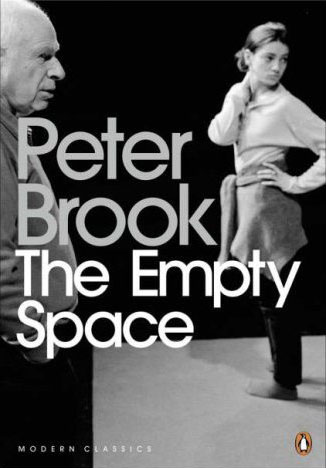
In 1968, Jean-Louis Barrault invited Brook to Paris to inspire his work as political and cultural upheavals were becoming commonplace on the streets and as a result Brook moved to Paris with his wife Natasha Parry to document this through the establishment of the International Centre of Theatre Research.  This involved a multinational company of actors, dancers and musicians who travelled widely in Iran, India and Africa, funded by the French government. In fact, he recalls that he felt more embraced by France than England at the time in the way that the 'company was international' and 'Paris was a natural place for people of all races to come together'.  His book, 'The Empty Space' was published and he was able to adopt the techniques of Jerzy  Grotowski.
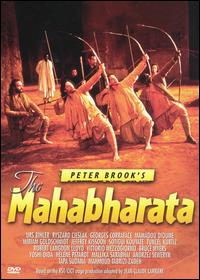
In the mid 1950s, he worked on adapting the Indian epic poem the Mahābhārata into a nine hour stage play which was eventually performed in 1985. It received overwhelming critical acclaim as it had 'transformed Hindu myth into universalised art, accessible to any culture'.  Nevertheless, it was equally problematic as many post colonial scholars described that it was astute in orientalism.  In 2015, Brook revived it as a version tieing in the myths of Hindu culture and the current political context of the time, highlighting the 'unseen cycle, in every human activity'.  By 2016, it travelled to France, Japan, Singapore and Mumbai as a sequel called Battlefield.
In two books, 'The Shifting Point' of 1987 and 'The Open Door' of 1993, Brook continued to reflect on the theatrical landscape and his own theories. In 1997, he won the Japan Art Association's Praemium Imperiale prize for Theatre/Film. He was poignant in screenplay as well as plays, including his contribution to the BBC writing a television production of Hamlet. 


Observations from 'The Empty Space':

THE EMPTY SPACE -
‘One look at the ordinary audience gives us irresistable urge to assault it. This is the road to the happening - happening is powerful, destroys dreariness of theatre. A happening can be anywhere, any time. Generate intoxicating energy. Behind the happening is the shout: ‘Wake up’ - spectator jolted into new sight awakened into life around them. Art combines to make the perfectly logical 20th century combination.
  • ‘Assaulted into apathy’ - the more we get used to happenings, it can become conventional and normalised just like the Deadly Theatre.
  • Holy art not only presents the invisible but also offers conditions that make its perception possible.
  • The present’s inadequacies of the happenings is that it fails to examine the failings of the perception.
  • Theatre is a social gathering that seeks for an invisibility - something that is possibly eternal or divine or efemeral. Something that is metaphysical - beyond the physical to interpenetrate and animate the ordinary
  • Theatre doesn’t have to be just a play and actors, it can have many disciplines within it with dance, movement, performance art, various languages and light shows.

WEEK THREE: GRAPPLING THE CONCEPTS OF BROOK/GROTOWSKI


In the sessions of Week Three, we did a range of exercises which correlated with our mini lectures on the practitioners Brook and Grotowski who were influential in the prospect of experimental theatre. These exercises helped us grapple the concepts of these practitioners, and also gave us an insight into the routine exercises these practitioners conducted as directors.


In Monday's session, we were focusing primarily on the concepts of Jerzy Grotowski. 


We discussed the idea that central to Grotowski's work, he gave the actors a 'series of shocks':

1) The shock of catching sight of his own evasions, tricks and clichés. 
2) The shock of sensing something of his own vast and untapped resources. 
3) The shock of being forced to question why he is an actor at all. 
4) The shock of being forced to recognise that such questions do exist and that - despite long English tradition of avoiding seriousness in theatrical art - the time comes when they must be faced. And of finding that he wants to face them. 
These 'shocks', in the theory of Grotowski, were central to the aim that actors could tap into their raw untapped emotion without consciousness, and this would lead to their optimum sacrifice within theatre. In 'Towards a Poor Theatre', Grotowski's book, he focused on how the stage could be stripped back to the extent where it was just the actor's body in the space involved with the audience. This involved a number of stages, which we explored through a number of exercises.


STAGE ONE: 'STRIPPING AWAY THE MASK'
In order for the actor to reach a pure state of creativity, they need to push themselves to their physical extremes. The body needs to be pushed in order for the mind to submit, almost like being in auto pilot.
Exercise One: Following the Body
The first thing we did was find our own space in the room and we sat in a crouching position. The focus here was the breath; firstly by finding it, then breathing deeper into the bottom of our backs, building up energy through faster and deeper breaths as the body was stationary, and reaching a place where the amount of energy accumulated has created potential. When the energy became unbearable, we began to burst and move forth around the room, allowing that energy to carry us through the space without consciousness or embarrassment. The further focus here was to allow the impulses to dictate the movement. When we bumped into eachother, we stopped and created a structure for the rest of the moving individuals in the space to navigate without self consciousness. 
With this exercise, initially, there was a lot of mental and physical blocks. Mentally, it was either said than done to not let your own doubts and afflictions to influence you into evaluating what you were doing, and physically, you had to really focus on using your peripheral vision to navigate the space although this was still seemed challenging given the smaller constraints of the room. Nevertheless, I would argue that there was a point in which these mental and physical blocks became less prominent: as we became more at ease within moving throughout the space with the use of peripheral vision and spatial awareness, not only did the physical blocks minimise but equally we were able to ignore any mental blocks too, and relax as an ensemble within the room. At this point, we reached a period of focus where all of us were less conscious and this was an interesting and insightful way for me to understand that similarity that Grotowski really wanted, in wanting a focused ensemble with no mental inhibitions that blocked them from reaching their raw untapped state.

Exercise Two: Passing The Energy
We stood in a circle and passed 'the energy' around the space, which took place in a circular motion. First, this was a clap and then it evolved into impulse led gestures and movements. We then repeated this with a leader in the middle of the space. That individual in the middle of the space closed their eyes and followed an impulse, evolving into a repetitive dance like movement that was then mirrored by another individual joining the circle. From this, a chain like effect was created in which every individual who went into the circle would create a movement based off an impulse. 
The physical blocks I experienced when I went into the middle of the circle correlated with the mental blocks I experienced. I found myself quite relaxed and open when I had my eyes closed, but as soon as I opened my eyes I became more tense and self aware about what I was doing, but I tried to override these blocks by focusing on the breath and using this to ease and clarify the movement.

Exercise Three: Leading with an Impulse
Similarly to Exercise Two, there was a significant focus on impulses and focusing on instinctual impulse rather than preconceived impulses.  We began to evolve impulses in the space with only one leader, yet the impulse/energy would still effectively get 'passed' from one person to another, allowing the impulses to evolve. We started with stamping, which became clapping, evolving naturally into things that were vocal, breath, claps, using the whole body or physicalised sound. 
This was quite beautiful to be apart of, and to me it illustrated how in an ensemble where everyone is offering and committing you can actually make a piece of theatre just using voice and sound. I think that from an audience or spectator perspective this would have been interesting to watch, which accentuates Grotowski's ideas of 'stripping back the space'. 

STAGE TWO: CONTRASTING CONTRARY EMOTIONS

Exercise One: Opposite Movements
We started patting our head while simultaneously rubbing our tummy, and similarly began rotating our arms in opposite directions, walking around the room slowly but with fast arms and vice versa, punching the air with one hand and stroking the hair with the other, punching the air and reacting through the face and also reacting facially (as well as with the whole body)  to being stroked while punching the air. 
This exercise highlighted the importance of communicating raw emotion through physicality, but also how our body be malleable in communicating multiple things even at once.

Exercise Two: Hat Stand
This exercise involved us becoming a hat stand: the body is a hat stand with many pegs.  Various parts of the body become hats hung on the many pegs. This exercise was challenging because we had to focus on suspending different parts of the body, which is difficult in practicality. 

Exercise Three: Voice 
In this exercise we focused on finding the optimum resonance for our voices, and how as actors if we tap into our untapped emotions and subconscious our resonance and connection to what we're doing can improve. We walked around the room vocalising vowels, and explored a range of body positions on and off the floor and around the room, aiming to find a position where we felt the sound resonated the most.
My personal position where I found optimum resonance was on the floor in a semi-supine position. Physically, it made me feel comfortable and relaxed but emotionally the position made me feel very grounded and I associated it with the connotations and emotions of lying in my bed at home in that same position, which is how I think I tapped into my emotions to find resonance.

Exercise Four: Exploring Dialectics/Exercises in Composition 
Within this exercise we focused on senses, and the significance of opposing forces. This involved the stimulus of walking over ice, walking over hot surfaces, walking over slippery surfaces, touching a snake/lizard and feeling a soft furry surface.  We also began to explore different things simultaneously and began to perform some of these tasks where our hands and feet where experiencing the same things at the same time.
As a response to this, we then got into groups and created visual tableaus which explored contradictions. Some of these contradictions included the themes of guilt and innocence, creation and destruction, birth and death and peace and war.

We created sounds that informed these visual tableaus, where the primary focus was to eradicate emotional blocks in the voice.
We then put these into a scene where we worked dialectically. A piece of immediate theatre was created where Tyreke represented and played a positive yet lying politician to the crowd who created a contradicting energy. This scene was relevant to the vision of Grotowski through removing the masks from ourselves and translating theatre to relate to society. 


In Tuesday's session, we were focusing more so on the concepts of Peter Brook, whose ideas are largely derived from Grotowski's work too. 


Peter Brook largely condemns the idea of 'The Deadly Theatre' or 'capitalist theatre', theatre that is dead, empty, monotonous and provides no transcendental experience. In his book 'The Empty Space', Brook explained why 'The Deadly Theatre' occurs in 7 steps:


  •  When all stage directions are prescribed by the writer, so there is no room for creativity
  • Conventional theatre that follows the rules
  • Theatre that is initiative rather than innovative
  • Deadly theatre approaches performance from the perspective 'that somewhere, someone has found out and defined how the play should be done.'
  • It persists because it doesn't adapt to a changing culture and the expectations of changing cultures.
  • It persists because it is capitalist theatre that is more consumerist than creative.
Instead, Peter Brook was fascinated with the 'holy theatre' - a new, fresh theatre that adds to the art form. He talks about the idea that theatre can happen and occur anywhere, and wanted it to be full of endless possibility where it is always changing in response to society. He was constantly determined to 'net the golden fish' and transform our thinking, and as a result he liked to create massive visual spectacles and subversive pieces of art: for example, his version of A Midsummer Night's Dream at the RSC in Stratford in the 1960s was his breakthrough performance. It involved a white, bare set with all the actors flying around the stage on swings on various levels. Through this production, he created memorable, elaborate images through using Shakespeare's text as a basis and re-imagining it in a fantastical way.

As well as this, Brook was fascinated with the idea of ritualistic theatre and wanted the experience of theatre to be almost like a ritual too. Theatre should be like a ritual in the fact that it is a communal experience, he thought, theatre can therefore cause healing and revelation. The role of theatre should be resounding affirmation in everyone's lives: people must be given a hunger for art and see that it is necessary for life.

Exercise One: Blindfolded

As actors, often we rely too much on sight to communicate within a play. In this exercise, we took the sight away through blindfolding too people within the circle and giving them the simple task to find the paper baton somewhere in the circle and hit the other person with it. As spectators in the circle, we had to be very silent so that the two participants had one less sense of hearing where they were.  This exercise was very interesting to observe because as soon as the two participants were blindfolded, it was evident how imminently they became vulnerable within the space. They had to trust themselves, each other and us as an audience within the space and there was instantly a sense of ensemble feeling. As spectators we had the benefit of dramatic irony, and the pursuit of the two people in the space having to find the paper baton and then the other person was very funny and entertaining to watch, particularly when one of them would be really close to the other person who had the baton, for example. Their vulnerability and stripped down senses meant that their pursuit to carry out this task in the circle was purely instinctual and reacted based on their impulses, and when they were less concerned about how this would look and it meant that their performance within the circle was very truthful. When TJ was hit by Rrahiim with the paper baton, his reaction was so dramatically comedic and animated yet so truthful, and these moments were really interesting and funny to watch. This links to Brook's ideas because he wanted the same vulnerability that the participants possessed in this exercise to be abundant all the time, as a result creating raw, powerful and truthful reactions based on instinctual impulses. It also inhibited the idea of a conventional 'Deadly Theatre' play which often lacks the awareness of other sensory forces.

Exercise Two: Internal Emotion Reflected Through The Body
This involved a series of improvisations. The first one myself and Stash did: our task was to enter the room, face the wall, sit down and adopt a state of being almost like we were meditating. Stash entered the room first: she was incredibly neutral. I entered the room second but I was focusing on this inward emotion that I possessed: anger. The spectators were observing this as it took place, and were making observations on how myself and Stash differed just through the way we were sitting and existing within the space. As it turned out, people got the sense that in  comparison to Stash, I was agitated and occupied by an emotion because I was sat a lot more upright, I was moving more and I was breathing a lot louder than Stash. In contrast, Stash was sitting very still in an incredibly neutral position. This exercise amplified the way in which our body language even through the most subtle and small gestures can alter how you exist within a space, and the way in which your audience interpreted it. We repeated this exercise similarly many times, and as an observer I concentrated on understanding the emotion that people were projecting just from sitting in front of a wall. What I gathered from this was that 'less is more' as the people that were most enticing and effective to watch were the ones who didn't try and show what they were feeling, but instead internalised it and let it affect them in this way.  Eventually, sounds were also used to communicate emotion, but I'd argue it was more effective without sound as a lot of the sound quite literally represented the emotion. Overall, this exercise was very important in accentuating Peter Brook's idea of the potential power of 'The Empty Space'.

Exercise Three: Making Sounds to Communicate Orders
In pairs and without verbal communication, we tried to make unusual sounds based on our own impulses that ordered our partners to do a certain action. I found this quite challenging and I don't know if it worked between me and Stash -  my order was to get her to hug me and I tried to make more emotional sounds that created associations of being sad and wanting attention, such as heavy sighs. When this didn't work, I tried to literally get her attention by clapping but then she just copied, so I don't think it was very successful. Nevertheless, this exercise was important in highlighting the importance of a connected ensemble who aren't reliant on sight and verbal speaking to communicate.

Exercise Four: Using Bamboo Sticks to Create a Ritual 
The last thing we did in the session was use bamboo sticks to almost explore the idea of ritualistic theatre that Brook is in favour of.  Our primary task was in pairs to take a bamboo stick on a journey around the room using one finger each. As opposed to us carrying the stick, the focus was to make the stick embody our 'soul' and then let it guide us. We then tried to emulate an emotion through the sticks' journey: me and Stash expressed happiness, but other people expressed spirituality and curiosity as other examples. We all possessed a bamboo stick and began to acquire and develop a relationship with the bamboo stick and its details, trying to find minimum surface content and then we took that bamboo stick on a journey around the room. This culminated in group work where we made various shapes with the sticks. From this exercise, I gathered a greater sense of Brook's ideas of how theatre is a communal experience. 

CHRONOLOGY

ALL WORK IN TERM THREE EXPERIMENTAL TERM LISTED (ALONG WITH HANDWRITTEN SITE SPECIFIC BOOKLET): WEEK ONE - What is experimental theatre?...