PETER BROOK

ARTICLES EXPLORED SURROUNDING PETER BROOK:
Peter Brook: 'Theatre exists in the present. You can't ignore the news' - The Stage
Peter Brook: 'To give way to despair is the ultimate cop-out' - The Guardian
'Peter Brook is an exceptional human being' -The Telegraph


Peter Brook was born in 1925 in Chiswick, London to Jewish immigrants. Brook had a relatively good education, studying at Westminster School, Gresham's School and Oxford University.
He adopted a high status as one of Britain's foremost directors at an early age, having directed his first Shakespeare play, King John, in 1945 for Birmingham Repertory. At this stage he was also highly involved in producing the avant-garde plays of Jean Cocteau and Jean-Paul Sartre.
In 1948 and 1949, he became more prominent in London directing several productions including an opera of Richard Strauss's 'Salome' with costume and set design by the famous surrealist artist Salvador Dalí. Following this, Brook became known for his approach to directing Shakespeare plays in which he strived to revive them with a fresh and inventive approach. He was also the youngest ever resident director at Covent Garden and in the West End.
 Some landmark productions include Measure for Measure in 1950, The Winter's Tale in 1951, Titus Andronicus in 1955, Hamlet in the same year, The Tempest in 1957 and King Lear in 1962. This involved a European tour with Laurence Olivier and Vivien Leigh who was in Titus Andronicus. His ground-breaking production of A Midsummer Night's Dream at the RSC which won critical aclaim. At this time, Brook was becoming increasingly influenced by and associated with Artaud's theory transpired from Artaud's 'Theatre of Cruelty' and won international fame through producing Le Balcon by Jean Genet in Paris and Peter Weiss's sensational play Marat/Sade in 1964. In these plays he explored the dynamic of a different actor-audience relationship and unconventional staging, obviously inspired by the pursuit of Artaud's ideas.
  In 1968, Jean-Louis Barrault invited Brook to Paris to inspire his work as political and cultural upheavals were becoming commonplace on the streets and as a result Brook moved to Paris with his wife Natasha Parry to document this through the establishment of the International Centre of Theatre Research. This involved a multinational company of actors, dancers and musicians who travelled widely in Iran, India and Africa, funded by the French government. In fact, he recalls that he felt more embraced by France than England at the time in the way that the 'company was international' and 'Paris was a natural place for people of all races to come together'. His book, 'The Empty Space' was published and he was able to adopt the techniques of Jerzy Grotowski.
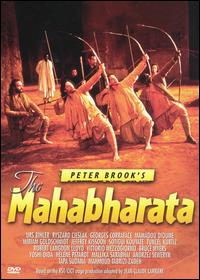 In the mid 1950s, he worked on adapting the Indian epic poem the Mahābhārata into a nine hour stage play which was eventually performed in 1985. It received overwhelming critical acclaim as it had 'transformed Hindu myth into universalised art, accessible to any culture'. Nevertheless, it was equally problematic as many post colonial scholars described that it was astute in orientalism. In 2015, Brook revived it as a version tieing in the myths of Hindu culture and the current political context of the time, highlighting the 'unseen cycle, in every human activity'. By 2016, it travelled to France, Japan, Singapore and Mumbai as a sequel called Battlefield.
In two books, 'The Shifting Point' of 1987 and 'The Open Door' of 1993, Brook continued to reflect on the theatrical landscape and his own theories. In 1997, he won the Japan Art Association's Praemium Imperiale prize for Theatre/Film. He was poignant in screenplay as well as plays, including his contribution to the BBC writing a television production of Hamlet.

Observations from 'The Empty Space':
THE EMPTY SPACE -
‘One look at the ordinary audience gives us irresistable urge to assault it. This is the road to the happening - happening is powerful, destroys dreariness of theatre. A happening can be anywhere, any time. Generate intoxicating energy. Behind the happening is the shout: ‘Wake up’ - spectator jolted into new sight awakened into life around them. Art combines to make the perfectly logical 20th century combination.
- ‘Assaulted into apathy’ - the more we get used to happenings, it can become conventional and normalised just like the Deadly Theatre.
- Holy art not only presents the invisible but also offers conditions that make its perception possible.
- The present’s inadequacies of the happenings is that it fails to examine the failings of the perception.
- Theatre is a social gathering that seeks for an invisibility - something that is possibly eternal or divine or efemeral. Something that is metaphysical - beyond the physical to interpenetrate and animate the ordinary
- Theatre doesn’t have to be just a play and actors, it can have many disciplines within it with dance, movement, performance art, various languages and light shows.


No comments:
Post a Comment